
India-China relations have always attracted Parliament's attention and there have always been useful and productive and constructive discussions how to engage with China, notes Rup Narayan Das.

'The missile mounted near Kailash-Mansarovar is called DF-21. It is a medium-range, 2,200 kilometres ballistic missile. Its advantage is that it can cover all cities of north India, including New Delhi'

Notwithstanding how the current impasse is solved, at some point in the future, Russia will realise that just as centuries ago it developed the paradigm of securing its heartland's safety through annexing vast buffer zones between itself and the enemy, a more modern security is possible only through friendly relations and sustainable peace, observes Shyam G Menon.

Statesmanship requires that the prime minister himself reaches out to those amassed at the Singhu and Ghazipur borders. Modi should be able to win over this domestic front with sheer compassion, observes Virendra Kapoor.

The United States, he said, 'desires a new age of ambition' in its relationship with India. Asserting that the US has never been more supportive of India's security, he said New Delhi too, is an important partner and a key pillar of President Trump's foreign policy.
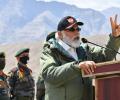
'We should not worry too much about Indian capabilities, both military and otherwise.'

'As for tricky relations with China, India needs less of summitry type event management and more anticipatory analysis and management of events,' says Ambassador Jaimini Bhagwati.

The banned Chinese apps, which include TikTok, Shareit and UC Browser, earn revenue mainly from online advertisements, subscriptions, and commissions for selling products. India is the biggest driver of these Chinese apps due to the population. The ban on the 59 Chinese apps will negatively affect the valuations of the companies, especially those going for IPO.
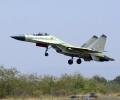
'We should have seen these signals and reacted earlier.' 'We miss out on a certain strategic advantage by arriving late on the scene.'

Chinese troops are reinforcing their posts in large numbers, increasing their patrolling, stepping up violations in the Tawang and Walong areas.

Overall, the People's Liberation Army Air Force (PLAAF) has focused on building ground-based air defense networks and network-centric operations rather than trying to match the Indian Air Force (IAF) in terms of straight fighter numbers along the border. All air assets fall under the Western Theater Command of the PLA, the largest geographic region of China's five military theater commands.
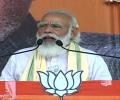
"The era of 'lalten' is gone. In the last six years consumption of electricity has increased 3 fold in Bihar," PM Modi said. "Voters of Bihar have taken a resolve that they won't let those who have a history of making the state 'Bimaru' come near them," he added.

'India should not be taken by surprise if the Biden administration seeks China's cooperation at some point,' alerts Ambassador M K Bhadrakumar.

Indian Army officers, serving and retired, will tell you that the one thing that makes the Indian soldier singularly unique is his josh and jazba.

President Ram Nath Kovind on Friday strongly defended the three new agri laws saying their benefits have begun reaching 10 crore small farmers instantly, and condemned as 'very unfortunate' the Republic Day violence and 'dishonour' to the tricolour during the tractor parade by the protesting farm unions in New Delhi.
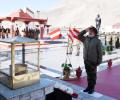
Lieutenant General Harinder Singh, who commands the 'Fire and Fury' 14 Corps, has the experience and talent to face down the Chinese challenge. The general is a rare combination of thinker and tough-minded doer, observes David Devadas.
The US has all along interfered in India-China issues. The objective is clear: Bring the Sino-Indian standoff to a flashpoint that would compel Modi government to take shelter under an American umbrella, argues Ambassador M K Bhadrakumar.
'The logical step is to challenge the very legitimacy of the Chinese claim over Tibet,' recommends Inspector General Gurdip Singh Uban (retd).

'I don't see how any Indian government or any Indian military leadership can now ask the soldiers to patrol without weapons.'
He made a reference to the clash between Indian and Chinese troops in Ladakh's Galwan Valley in June this year. "What our jawans can do, what the country can do, the world has seen in Ladakh," he said.

'The fatal mistake for the USSR was the invasion of Afghanistan.' 'Quite possibly the fatal mistake for the Chinese empire is the assault on Ladakh,' observes Rajeev Srinivasan.

'Could the Chinese have taken a leaf out of our book?' 'That their unprecedented build-up is their attempt at coercive diplomacy with India?' 'And if so, what is it that they could be expecting as a quid pro quo?' asks Shekhar Gupta.
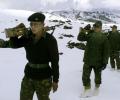
'It is a miracle how a soldier handles the lack of oxygen, stands his post and also confronts the Chinese at 14,000 feet where survival itself is a challenge.'
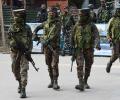
The days of a thousand cuts are over. These mini wars will remain under the threshold of undeniable war, but will escalate closer to that threshold when their big brother pushes in. Chinese aggression has changed the matrix, the strategies, and surely the objectives too, warns David Devadas.

The onus today is on China, but it also requires a little diplomatic finesse from India, backed by a modernised armed force, argues BJP MP Subramanian Swamy in this excerpt from his new book, Himalayan Challenge: India, China And The Quest For Peace.

'Our people are crazy about cricket, but they are more crazy about their country, and their armed forces.' 'To the people of India, there is nothing that is above the nation, not even cricket.'
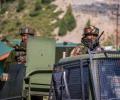
'Why has the peace been kept?' 'Basically because there is a balance.' 'Maybe they think that balance has changed.' 'People can make mistakes. People can miscalculate.' 'If that is the cause, then I think what we have done, matching their build-up, etc, it is giving a good account of ourselves in the face-offs.'
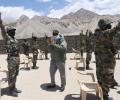
Only he, with his tremendous political capital and personal stature, can pull it off, observes B S Raghavan, the veteran civil servant.

'It could have moved from the use of small arms to artillery fire.' 'Anything could have happened like what happens on the LoC.'

The Indian Army has shown it can face down the PLA, but is too often held back by a political leadership that lacks boldness, asserts Ajai Shukla.
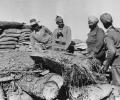
'The Himmatsinghji Report is still 'missing'.' 'It is a great loss for the knowledge of India's borders.' 'It would have an immense value at a time China is bound to shift its attention to other border fronts in the Himalayas,' notes Claude Arpi.

'All the government needs to do is to identify clear political and strategic objectives and to give the military planners a free hand,' asserts Ajai Shukla.

'Open conflict would be a disaster for both China and India.'

When China protested strongly over the August decision on J&K -- not once but twice -- we ignored it. And to compound matters, we simply turned our back and walked over to the 'Quad' alliance with the US, upgrading it to ministerial level, and thereafter began following the American footfalls on Taiwan and COVID-19 to taunt and humiliate Beijing, observes Ambassador M K Bhadrakumar.

But why should India be talking to the Taliban in the first place? There is no love lost there. India will never forget or forgive the humiliation to which the Taliban subjected it in the IC-814 hijack, notes Shekhar Gupta.

'One must remember that a dragon has a forked tongue,' warns Vivek Gumaste.

The India-Japan joint naval exercises are a strategic signal for China, observes Dr Rajaram Panda.
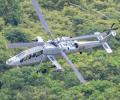
All of India welcomes the Light Combat Helicopter into the Armed Forces arsenal and wishes it a safe tenure and happy shooting. May it rule the skies and ensure that the enemies are given a fitting reply when the need arises.
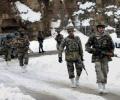
'The Indian Army's surveillance had noticed the Chinese movements.' 'There was no intelligence failure.'
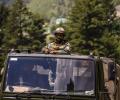
The Indian Army's Northern Command would be stretched if all three of the corps under it -- based in Leh, Srinagar, and Nagrota (near Jammu) -- were to face hostilities, notes David Devadas.
